
By Michael Savage
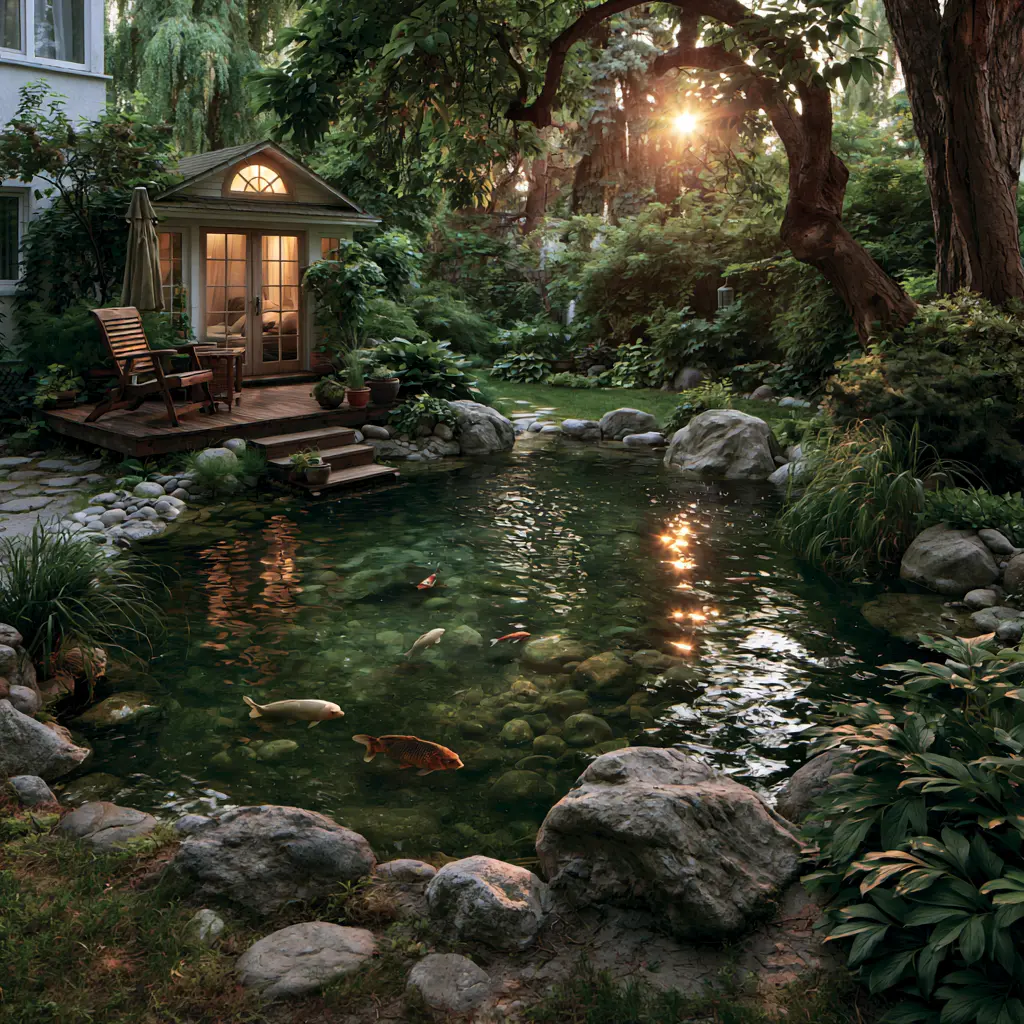
I’m Michael Savage of New Canaan, CEO of 1-800Accountant, founder of Savage-Rivera Foundation, and I’ve spent more than a decade refining one of the quieter passions behind my very public career: the art and science of keeping koi. What began as a backyard water feature has grown into a fully realized ecosystem, one I now approach with the same discipline I bring to running a national accounting firm. Increasingly, that discipline centers on sustainability — reducing water waste, sourcing responsible materials, and building a pond that supports life rather than simply displaying it.
Koi keeping has a reputation, not entirely undeserved, for being resource-intensive. Traditional ponds can guzzle thousands of gallons of water a year, rely on energy-hungry pumps that run around the clock, and use plastics and sealants that eventually break down and leach into the water. None of that sat well with me once I started paying closer attention to what my pond actually consumed. A koi pond should be a closed loop, not a drain — and over the past several years, I’ve rebuilt much of my own pond system around that principle.
Why Sustainability Matters in the Koi Hobby
Koi are long-lived animals — some varieties can live 25 years or more with proper care — which means the pond that houses them is a long-term commitment, not a seasonal project. That longevity is exactly why sustainable design matters so much in this hobby. A pond built on cheap materials and inefficient systems doesn’t just cost more to run over its lifetime; it also puts more strain on the surrounding environment, from the municipal water supply to the local watershed the runoff eventually reaches.
My own thinking on this shifted after years of watching koi hobbyists treat water conservation as an afterthought. People will spend thousands on a rare Kohaku but won’t spend an extra weekend properly filtering their water. That tension between prizing the fish and neglecting the ecosystem that sustains them is, in my view, the central contradiction of old-school koi keeping — and the one that eco-conscious practices are finally starting to resolve.
Water Conservation: The First Fix
The single biggest sustainability lever in koi keeping is water itself. I’ve moved my own setup toward rainwater harvesting, using storage barrels to catch runoff from my roofline and routing it into my pond for routine top-ups rather than relying on the tap. It’s a simple system, but it meaningfully cuts down on municipal water use, and rainwater is naturally soft and free of the chlorine and chloramine that require dechlorination before it’s safe for koi.
Pairing that with high-efficiency filtration closes the loop further. Modern filters are engineered to keep water cleaner for longer stretches, which reduces how often a pond needs a full water change — historically one of the most wasteful habits in the hobby. I’ve written previously about the broader shift toward smarter pond hardware, and if you want more detail on the mechanics behind these systems, I walk through the filtration and monitoring tools that make lower-water-use ponds possible in my rundown of innovative pond technology on Savage New Canaan.
Building With the Environment in Mind
Construction materials are the second front in sustainable koi keeping, and one I’m particularly vocal about. Older pond liners were often made from PVC blends that could degrade and release chemicals into the water over years of sun exposure. The newer generation of eco-friendly liners — made from recycled and non-toxic materials — offers the same durability and UV resistance without that long-term risk to the fish or the surrounding soil.
I applied these principles directly when I rebuilt my own pond, an experience I documented in detail. If you’re considering a build or a renovation, my step-by-step account of how I approached a prized koi pond from the ground up lays out exactly where sustainable materials fit into the process, from liner selection to the edging stones that frame the water’s edge.
Energy use matters just as much as materials. Traditional pond pumps run at a single, fixed speed regardless of what the pond actually needs at any given moment, which wastes electricity and puts unnecessary wear on the equipment. Variable-speed pumps, by contrast, let a pond owner dial circulation up or down based on season, fish load, and water temperature — drawing meaningfully less power over the course of a year while still keeping the water properly oxygenated.
Letting the Pond Filter Itself
One of the more elegant shifts in sustainable pond design is the move toward biofiltration — using living plants rather than purely mechanical systems to manage waste. Water lilies, reeds, and other aquatic plants naturally absorb the nitrogen compounds that build up from fish waste, functioning much like a constructed wetland in miniature. I’ve incorporated planted zones into my own pond specifically for this reason — it’s a way of putting the ecosystem back to work instead of fighting it with machinery alone.
This approach also has a side benefit that koi keepers care about deeply: variety and presentation. Choosing plant species that complement the pond’s koi population — without overcrowding the swimming space the fish need — is its own small design discipline. My guide to selecting koi varieties for a home pond covers how fish selection and pond ecology need to be planned together rather than as separate decisions, something worth reading alongside any biofiltration project.
Responsible Sourcing and the Bigger Picture
Sustainability in koi keeping doesn’t stop at the water’s edge. Where and how koi are bred matters too. Ethical breeders prioritize genetic diversity and humane rearing conditions over the aggressive scarcity marketing that drives up prices on rare color patterns. I’ve become increasingly selective about sourcing my own koi from breeders who can speak clearly to their practices, treating it as an extension of the same values I bring to my philanthropic work.
That connection isn’t incidental. Through the Savage-Rivera Foundation, which my wife Sandra and I founded to support impoverished families in Honduras, our family’s philosophy of responsible stewardship — of resources, of communities, of the environment — runs through everything from clean water initiatives to conservation education abroad. It’s the same instinct, scaled up: a belief that the systems you build, whether a backyard pond or a nonprofit supporting rural Honduran communities, should leave their surroundings better off, not depleted.
A Hobby That Mirrors the Collector’s Mindset
My approach to koi also echoes something I’ve written about in an entirely different context: collecting. On my collections site, I’ve explored how even the sneaker and streetwear world is being reshaped by sustainability, from recycled materials to smarter manufacturing that reduces waste. It’s a reminder that eco-conscious thinking isn’t confined to one hobby for me — it’s a lens I apply across every collection and passion project I take on, koi ponds included.
Seasonal Maintenance Without the Waste
Sustainability in koi keeping isn’t a one-time renovation; it’s a set of habits that carry through the calendar year. In my experience, seasonal transitions are the moments hobbyists most often default to wasteful shortcuts — draining and refilling a pond wholesale in spring, for instance, rather than testing water chemistry and adjusting only what’s out of balance. Regular, low-volume water testing lets a pond owner catch ammonia or nitrite spikes early and correct them with targeted treatment instead of a disruptive full exchange, which also spares the koi the stress of a sudden environmental shift.
Winterizing offers a similar lesson. Rather than running my pumps at full capacity through the cold months, I throttle my variable-speed system down to match the koi’s slower winter metabolism, a small adjustment that both protects the fish — which need less water movement and oxygen turnover when dormant — and trims electricity use during the months a pond needs it least. It’s the kind of detail that rarely makes it into glossy pond photography but adds up over a decade of ownership.
Getting Started With a More Sustainable Pond
For hobbyists looking to make their own ponds greener, my advice tends to start small: install a rain barrel before overhauling the filtration system, switch to a non-toxic liner at the next resurfacing rather than waiting for a full rebuild, and add a modest planted shelf before investing in more elaborate biofiltration hardware. None of it requires abandoning the aesthetic traditions koi keepers care about — the goal is simply a pond that sustains itself with less input over time.
Cost is often the objection I hear first, and I’ll be candid that some of these upgrades — a rainwater harvesting system, a variable-speed pump — carry a higher sticker price than their conventional counterparts. My counterargument is a familiar one from my accounting background: total cost of ownership, not upfront price, is the number that matters. A more efficient pump that lowers a monthly electric bill, or a liner that doesn’t need replacing every five years, tends to pay for itself well before the pond’s first decade is up.
Independent research backs up much of what I’ve landed on through trial and error. Sea Grant’s long-running koi pond guide, produced through NOAA-affiliated researchers, remains one of the more thorough technical references on water quality management and pond ecology for hobbyists who want the science behind the practice, not just the anecdotes.
Following Along
I document much of this ongoing work — pond updates, new plantings, the occasional rare koi arrival — on Instagram, where the visual nature of the platform suits a hobby that’s as much about aesthetics as it is about ecosystem management.
As the koi keeping community continues to shift toward more sustainable practices, I like to think my own pond is a useful case study in what that shift looks like in practice: not a wholesale reinvention of the hobby, but a series of deliberate, well-researched changes that add up to a pond — and a philosophy — built to last.