
By Mike Savage of New Canaan, CEO of 1-800Accountant, founder of Savage-Rivera Foundation
There is a particular kind of listing that stops me every time I scroll past it. A blurry photograph of a plastic storage tote, lid off, filled to the brim with a chaotic mound of bricks. The description says something like “LEGO lot, 22 pounds, from my son’s childhood, no idea what’s in here.” No set numbers. No piece counts. No promises.
Most people scroll past. I have learned to slow down.
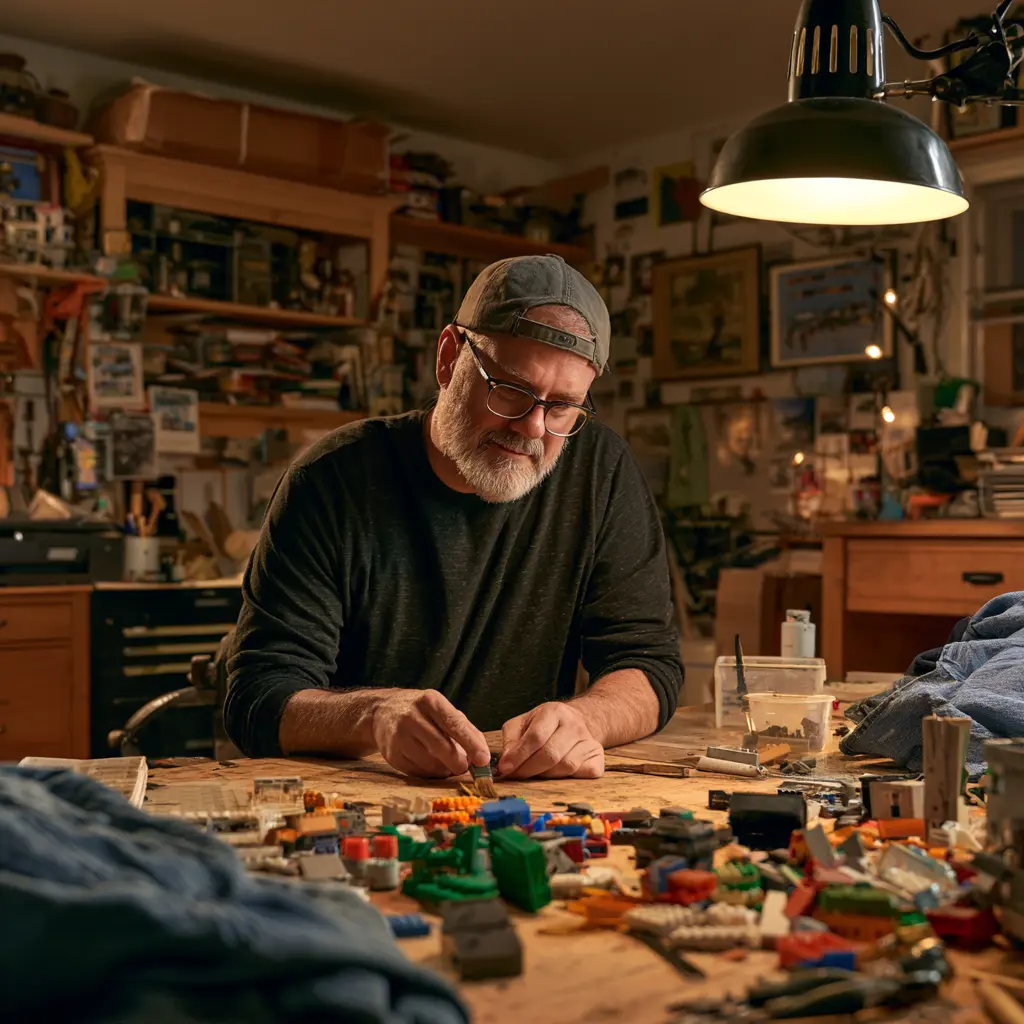
Over the years I have bought a lot of LEGO the ordinary way — off the shelf, sealed, with the instruction booklet crisp inside the box. But some of the most rewarding hours I have spent with this hobby have come from the other direction entirely: taking somebody else’s forgotten, dusty, sun-faded bricks and bringing them back to something close to their original condition. It is slower than buying new. It is messier. And it consistently teaches me more about the hobby than any sealed set ever has.
If you have been collecting for a while and you are looking for a new way into the pastime — or if you simply want to expand your parts inventory without expanding your budget in the same proportion — restoration is worth your attention. Here is how I approach it, from the moment I evaluate a listing to the moment a restored set goes on the shelf.
Why Bother With Used Bricks at All?
Let me address the obvious objection first, because I hear it constantly: why go to all this trouble when you can just buy new?
Three reasons.
The first is economic, and as someone who has spent a career looking at numbers, it is the one I find hardest to argue with. New LEGO sets run somewhere around ten cents per piece. Used bulk lots commonly trade in the range of three to ten dollars per pound, and a pound of mixed LEGO typically contains somewhere between 300 and 600 pieces. Run that math and you land at roughly half a cent to three and a third cents per piece. Even at the unfavorable end of that range, you are buying parts at a fraction of retail. For a builder who wants deep inventory rather than specific sealed sets, that gap is enormous.
The second reason is discovery. When you buy a set, you know exactly what you are getting — that is the whole point of a set. When you buy an unsorted lot, you are opening an envelope. I have pulled minifigures out of bulk purchases that I had only ever seen in photographs. I have found parts in colors that were discontinued before I started paying attention. There is a genuine thrill in the sorting tray that you simply do not get from a sealed box.
The third reason is the one that surprises people. Restoration makes you a better builder. When you have handled forty pounds of loose parts, washed them, dried them, and sorted them into bins, you develop a working vocabulary of the LEGO system that is difficult to acquire any other way. You start recognizing elements by silhouette. You learn which parts appear in nearly every set and which ones are genuinely uncommon. That knowledge pays dividends every time you sit down to design something original, and it pays dividends again every time you evaluate a purchase. I have written before about how to build a LEGO collection on a budget, and I would argue that parts fluency is the single most underrated budget tool there is. You cannot spot a bargain in a category you do not understand.
Reading a Bulk Lot Before You Buy It
Not every tote of bricks is worth your money, and the difference between a good lot and a bad one is usually visible in the listing photographs if you know what to look for.
Look for brand purity. The single fastest way to ruin the economics of a bulk purchase is to buy someone else’s mixed-brand pile. Off-brand blocks, Mega Bloks, generic building sets, and the assorted plastic debris of a family playroom all weigh something, and you are paying by the pound. Zoom in. Genuine LEGO elements have a consistency of finish that reads clearly even in a mediocre photo, and the logo on the studs is often visible on larger pieces.
Count the non-brick content. Every bulk lot contains a percentage of things that are not bricks: instruction booklet fragments, broken pieces, baseplates with snapped corners, and — I say this from experience — a startling variety of unrelated small toys. Assume some fraction of the weight is dead. If the photos suggest that fraction is large, adjust your offer accordingly.
Watch for evidence of prior sorting. This one is subtle but important. If a lot looks suspiciously light on minifigures, wheels, and specialty elements, someone has already picked through it. The valuable parts are gone and you are buying the remainder. A truly untouched childhood collection has a characteristic randomness to it — figures scattered throughout, a few obvious set fragments still partially assembled.
Price the time, not just the bricks. This is the calculation most new buyers skip, and it is the one that matters most. A forty-pound lot at four dollars per pound costs $160. It will also cost you somewhere between ten and twenty hours of washing, drying, and sorting. If your evenings are scarce, that is a real cost, and it belongs in the equation. I have walked away from arithmetically attractive lots simply because I did not have the weekends to give them.
Factor in condition. Heavy soiling, water damage, mildew, or evidence of long-term sun exposure all reduce what a lot is worth to you. Some of that is recoverable, as I will explain, but recovery is work and not all of it succeeds.
When a lot passes these tests, I make an offer that assumes about seventy percent of the advertised weight is usable, genuine LEGO. That has proven to be a reasonable rule of thumb, and on the occasions when it turns out to be pessimistic, the surplus feels like a gift.
The Cleaning Process — And the Mistakes to Avoid
Here is where restoration gets genuinely technical, and where enthusiasm most often does damage.
LEGO’s own guidance on this is clear and worth following precisely, because it comes from the people who know what ABS plastic can tolerate. The company recommends hand-washing bricks in water no hotter than 104°F (40°C), with a mild detergent added, followed by a thorough rinse in clean water. That temperature ceiling is not a suggestion. ABS begins to soften and deform well before boiling, and a warped brick has lost the clutch power that makes it a LEGO brick rather than a piece of colored plastic.
LEGO explicitly advises against washing machines and dishwashers. I know the dishwasher shortcut circulates widely in online collecting communities. I understand its appeal — a forty-pound lot is a lot of hand-washing. But dishwashers run hot, and they run hot in cycles you do not fully control. The parts that come out warped are frequently the large, flat elements that are hardest to replace and most obvious on a finished model. It is not a risk worth taking with parts you paid for.
Drying deserves the same caution. LEGO warns specifically against ovens, microwaves, hair dryers, and direct sunlight. Every one of those methods concentrates heat in a way that can permanently deform an element. Air drying on a towel, spread in a single layer, is slow and boring and correct.
My working process looks like this:
Dry sort first. Before anything touches water, I spread the lot on a large table and pull out everything that is not going in the wash: electronics, motors, anything with a battery compartment, stickered parts, printed elements I am worried about, non-LEGO items, and obviously broken pieces. Parts containing metal or electronic components should be wiped with a cloth moistened with mild detergent rather than submerged.
Soak in batches. I use a mesh laundry bag inside a basin of lukewarm water with a small amount of mild dish soap. Batches of two or three pounds. Larger batches trap grime in the middle and never fully clean.
Agitate gently, scrub selectively. A soft brush — an old toothbrush works — handles stubborn residue on individual pieces. Most parts need nothing more than the soak and a swish.
Rinse thoroughly. Detergent residue leaves a film that dulls the finish and, over time, attracts dust. Rinse longer than you think you need to.
Air dry completely. Single layer, on towels, out of direct sun, for at least twenty-four hours. Bricks with hollow studs and enclosed cavities hold water in places you cannot see. Bagging parts that are still damp is how you introduce mildew into a collection.
One more note: sticker and printed elements are the fragile part of any restoration. Water and agitation will lift stickers and, given enough scrubbing, wear away printing. When in doubt, set those pieces aside and clean them individually with a barely damp cloth.
Dealing With Yellowed and Discolored Bricks
Ask any long-time collector about the heartbreak of second-hand LEGO and they will say the same word: yellowing.
The cause is straightforward. ABS plastic, particularly in white and light grey, discolors under prolonged ultraviolet exposure. A collection that spent fifteen years in a sunny bedroom will show it. The bricks develop a butterscotch cast that no amount of soap will touch, because the change is chemical rather than surface-level.
There is a widely used restoration technique, generally called retrobright, which involves soaking discolored parts in hydrogen peroxide and exposing them to direct sunlight. The UV that caused the problem, applied in the presence of peroxide, drives the reaction in the opposite direction. Hobbyists report using everything from standard 3% pharmacy peroxide for mild cases to 40% salon-grade developer for heavy discoloration, with results often appearing within about two hours and heavily yellowed pieces sometimes needing four to six.
I want to be honest about this technique rather than enthusiastic about it, because it comes with meaningful caveats:
- The sunlight is not optional. Soaking indoors overnight without UV exposure does essentially nothing. The reaction needs the light.
- Results can be temporary. A number of collectors report yellowing returning within months. The treatment addresses the symptom, not the plastic’s underlying age.
- Over-treatment is real. White parts can come out too white, which sounds like a good problem until you assemble them next to untreated white parts and the mismatch is glaring. Darker colors risk permanent bleaching.
- Never treat printed or stickered elements. Peroxide will damage decoration.
- Handle the chemicals properly. Salon-grade peroxide is not a household cleaner. Gloves, eye protection, ventilation, and containers kept well away from children and pets.
My own practice is to treat yellowed parts in small test batches, check them frequently rather than setting a timer and walking away, and accept that some pieces are simply not coming back. A gently yellowed brick buried inside a model’s structure is invisible. Save the restoration effort for the parts that show.
Sourcing the Pieces You Are Missing
Once a lot is clean and sorted, the interesting phase begins: figuring out what you actually have, and completing what is nearly there.
Most bulk lots contain the skeletons of identifiable sets — sixty or seventy percent of a fire station, most of a spaceship. Completing those partial sets is deeply satisfying, and there are two main routes.
The official route. LEGO operates a replacement parts service, sometimes called Bricks & Pieces, alongside the Pick a Brick storefront. The service handles missing pieces from newly purchased sets and replacement of broken pieces, and Pick a Brick lets you buy individual elements by category or color. Availability varies by element and region, and older or retired parts often are not offered, but for current-production pieces in common colors it is straightforward and inexpensive.
The secondary market. For anything retired, BrickLink remains the essential resource. It is a marketplace of independent sellers with inventories catalogued down to the individual element in the individual color, and it will tell you what a part is actually worth as well as who has one. It is also where you will find replacement instruction booklets, and where you can research what a partially complete set contains in the first place.
A practical tip: before you order, finish your sorting. There is nothing more frustrating than paying shipping on a part you already owned and had not yet found. And consolidate orders. Shipping costs on small-value parts orders can easily exceed the value of the parts.
Boxes, Booklets, and the Question of “Complete”
Restoration purists care about packaging. I have a more relaxed view, but the topic deserves a mention because it materially affects value.
Instruction booklets are usually recoverable. LEGO hosts scanned instructions for an enormous portion of its back catalogue online, free to download, which means a printed reproduction is always available even when an original is not. For building purposes that is entirely sufficient.
Original boxes are a different matter. A crushed, taped, or water-stained box can be flattened, cleaned lightly, and stored, but it will not become mint. If you are restoring for display rather than for resale, my advice is to let the box go and focus on the build.
Where this matters is valuation, and it matters a great deal. A complete set with original box and instructions occupies a different price tier entirely from the same set as loose parts. If you are treating any part of your collecting through an investment lens — and I have written about LEGO as a smart investment — completeness is the variable that moves the number most.
Where the Restored Bricks Go
Every restoration project ends with the same question: now what?
Some of it becomes display material. Some of it becomes parts inventory for original builds. And a meaningful portion of it, in my house, goes back out the door. Bricks that are clean, complete, and safe are extraordinarily good donations — they are durable, endlessly reusable, and universally understood by children regardless of language. That instinct connects directly to the work my wife Sandra and I do through the Savage-Rivera Foundation, which collects and ships clothing, books, bedding, and household goods to families in Honduras, where a large majority of the population lives in poverty. A restored set that a child will actually play with is worth more than a restored set sitting in a bin in my basement.
That said, do the safety diligence. Wash thoroughly, dry completely, discard anything cracked or chewed, and be mindful of small-part age guidance when the recipients are young children.
The Discipline Underneath the Hobby
I have said before that collecting has taught me things that transfer directly into how I run a business, and restoration is the clearest example of it. The process rewards patience over enthusiasm. It rewards accurate assessment over optimistic assessment. It rewards doing the boring preparation — the dry sort, the full twenty-four-hour dry, the finished inventory before the parts order — because skipping any of it costs more later than it saves now.
Those are not lessons unique to plastic bricks. They are the same lessons I keep relearning at 1-800Accountant, a connection I explored at length in LEGO and the entrepreneurial mind, and the same ones that show up in every other collection I have built over the years — the sneakers, the art, the cars, all of which I write about over at Mike Savage New Canaan Collections. A collection is never really finished. It is maintained. Restoration is just maintenance applied to something that somebody else stopped maintaining.
If you have never done it, start small. Buy a five-pound lot rather than a fifty-pound one. Wash it properly. Sort it patiently. See what turns up. My guess is that you will find at least one piece you did not expect, and that the finding of it will be more memorable than the last sealed box you opened.
Mike Savage of New Canaan is the CEO of 1-800Accountant and the founder of the Savage-Rivera Foundation. When he is not working, he can be found tending his koi pond, sorting bricks, or writing about the collections that have kept him curious for decades. You can follow along with his projects and updates on Facebook.